Try our newest merchandise
As soon as the vacation desk is cleared, many dwelling cooks throughout the U.S. could be left questioning what they’re purported to do with all the leftovers. From a easy turkey sandwich to the extra unique leftover turkey curry or chipotle turkey tostadas, your choices for artistic post-holiday cooking are limitless. However no matter the way you put together them, storing and reheating leftovers safely is a should.
Fridge group is a generally ignored side of environment friendly dwelling and meals security. Many individuals are used to placing gadgets the place they greatest match. However relying on what you’ve in your fridge, that strategy might be placing you and your loved ones in danger for foodborne sickness.
Cross-contamination is the first security danger from improperly putting meals within the fridge, says Lisa Yakas, senior challenge supervisor in NSF Worldwide’s dwelling merchandise certification program. Dangerous micro organism like e-coli and salmonella can come from meats, and uncooked greens can move on filth and soil which will harbor dangerous organisms from uncooked greens. Micro organism can move from meat to different meals even when the 2 aren’t touching if meat juice leaks or drips.
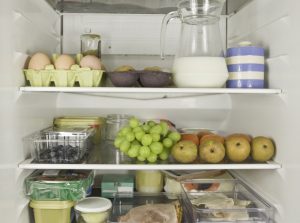
Let’s open the door, peer contained in the fridge and see how one can enhance your meals storage, make your life simpler and cut back your danger.
Earlier than (and after) you reorganize any of your meals, nonetheless, wash your arms.
In the event you’re placing any of the meals on the countertop whereas reorganizing, clear the realm earlier than and after.
The fundamental guidelines of fridge group are easy.
- Retailer meats on the underside cabinets, so any drips received’t fall onto different meals.
- Retailer ready and packaged meals in areas the place they received’t contact uncooked meats, fruits or greens.
- Uncooked greens belong within the crisper, the place they received’t come into contact with different meals.
Yakas recommends cleansing out the areas within the fridge the place meats and uncooked greens are saved at the very least as soon as a month. Cleaning soap and heat water will normally do the job, however examine the fridges’ use and care guide for particular directions.
Maintain your fridge between 37 and 40 levels Fahrenheit.
Leftover Security
With meals storage a precedence in lots of households underneath stay-at-home orders, it’s a very good time to overview the protected storing and reheating of leftovers as effectively. “As persons are saved of their houses, they’re consuming at dwelling extra,” Yakas says. “As a common rule, leftovers must be eaten or discarded inside three to 4 days. “Freeze it instantly when you aren’t going to eat it,” Yakas says.
Meals which have been cooked have to be refrigerated inside two hours. Yakas factors out that the timeframe to refrigerate leftovers might be narrower if the temperature exterior is hotter. If in case you have a big container of leftovers to retailer, like a giant pot of soup or sauce, divide it in to smaller parts for simpler storage and sooner cooling.
When reheating meats, use a meat thermometer similar to you’d when cooking it for the primary time. Reheat leftovers to 165 levels to kill any micro organism which will have fashioned previous to or throughout storage. Meat must be measured at a thick spot to make sure it has been heated throughout. If the meat has a bone, take the temperature near the bone, however not touching the bone. The temperature of bone and fats will be totally different than that of the meat.
Different meals storage ideas: Label and date your leftovers and retailer the oldest close to the entrance of the fridge so that you’ll know what must be eaten first. Get essentially the most out of what you’ve readily available so that you don’t must make pointless journeys to the grocery retailer.
Inform us how you might be managing throughout this time, and what ideas you’ve discovered most useful.
Subscribe to the AHAM Client Weblog